Drilling & Investigation
Odex & Rotary Drilling
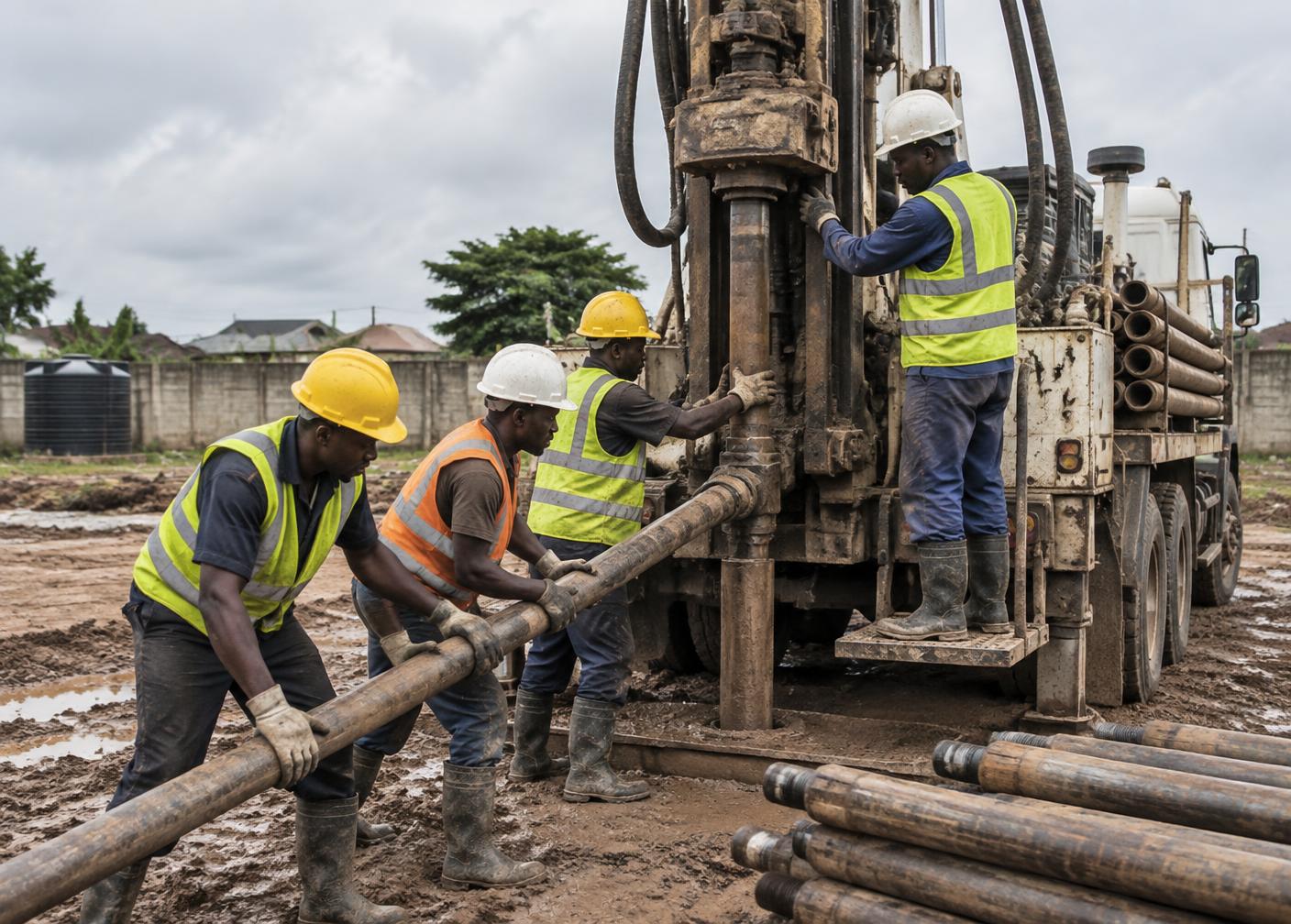
Drilling methods matched to the ground: rotary for softer formations, Odex where collapsing overburden must be cased as you drill.
Not every site can be drilled the same way. Loose overburden, collapsing sands and hard rock each call for a different method.
We use rotary drilling where the formation is stable and Odex drilling where casing has to advance with the drill bit to hold the hole open.
Selecting the right method protects the hole, avoids wasted work and results in a borehole that stands up over time.
Who this is for
- Sites with collapsing sand or deep loose overburden
- Hard rock locations and hillside sites
- Projects where a previous borehole collapsed
- Industrial and high-yield installations
Our process
How the work is done
- 1
Formation review
Survey data and local experience indicate what the ground will present.
- 2
Method selection
Rotary or Odex drilling is chosen for the conditions expected.
- 3
Drilling
The hole is advanced with casing support where the formation requires it.
- 4
Completion
The borehole is cased, screened, developed and tested.
FAQ
Odex & Rotary Drilling questions
Related
Related services
Request a site assessment
Ready to develop a dependable water source?
Tell us about your site and what you need the water for. We will advise on survey, depth and the most practical approach before any drilling begins.